
Written by: Belinda Fomba, PMHNP-BC
Medication Content Reviewed by: Derek Fomba, PharmD, MBA
Last Reviewed: September 2026
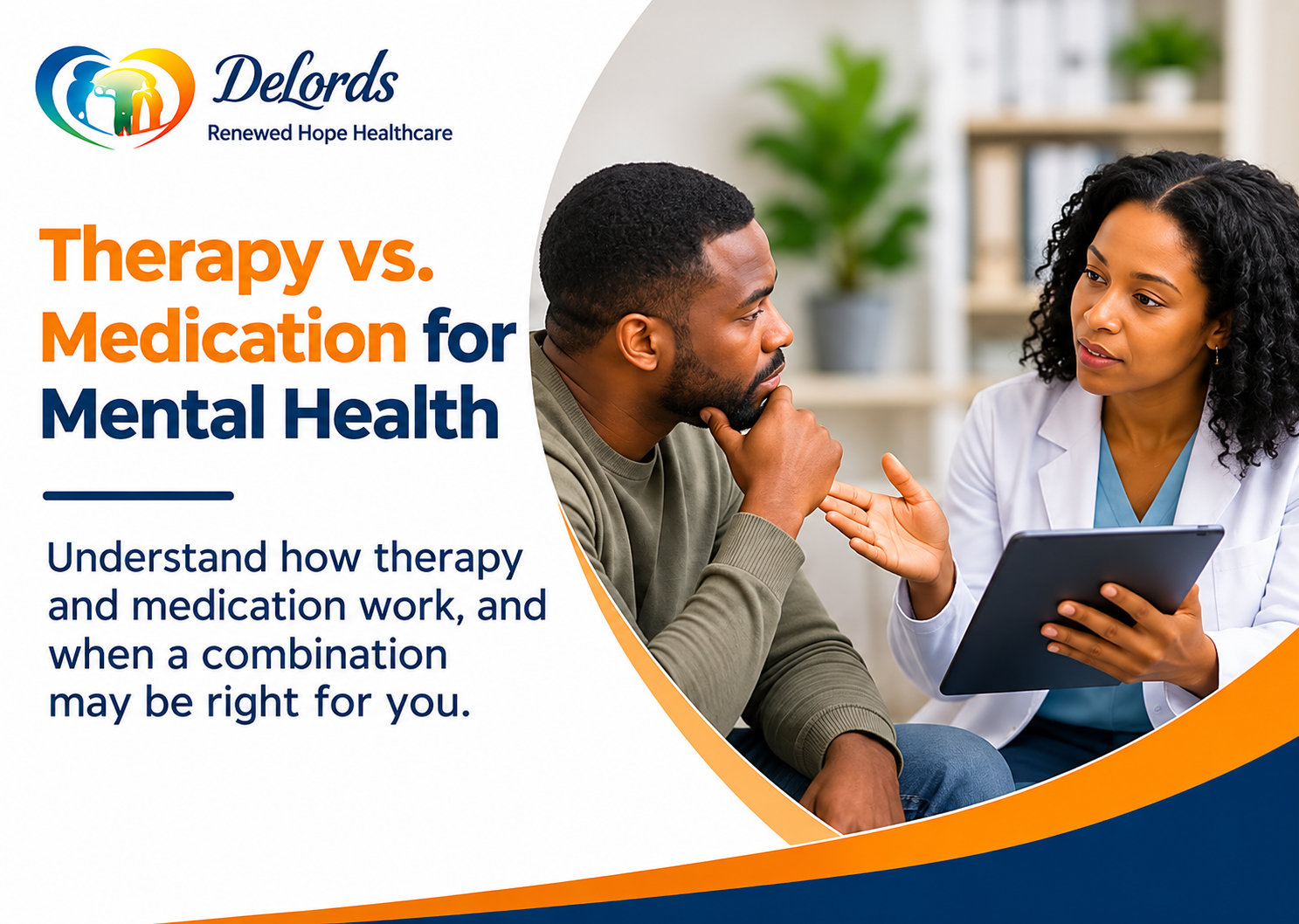
When seeking help for anxiety, depression, ADHD, trauma, or other mental health concerns, one of the most common questions people ask is whether they should choose therapy or medication.
There is no one-size-fits-all answer. The decision between therapy, medication, or a combination of both depends on your symptoms, diagnosis, symptom severity, overall health, treatment goals, and personal preferences.
Understanding how these treatment approaches work can help you have a more informed conversation with your healthcare provider and participate actively in decisions about your mental health care.
Understanding Therapy vs. Medication
Mental health treatment may include two common approaches:
Both approaches can be effective, and some people benefit from a combination of therapy and medication. The most appropriate treatment depends on the condition being treated, symptom severity, individual needs, medical history, and personal preferences.
The goal of treatment is not simply to reduce symptoms but also to improve daily functioning, emotional well-being, and overall quality of life.
What Is Therapy?
Therapy involves working with a qualified mental health professional to explore thoughts, emotions, behaviors, relationships, and life experiences.
Therapy can help individuals better understand patterns that may contribute to emotional distress while developing healthier ways of coping and responding to life’s challenges.
Benefits of Therapy
Depending on a person’s needs and the type of therapy used, therapy may help individuals:
Therapy can help individuals understand and change patterns of thinking, behavior, relationships, and coping that may contribute to emotional distress. It can also provide practical skills for managing symptoms and improving daily functioning.
Types of Therapy
Common therapeutic approaches include:
Different therapeutic approaches may be appropriate depending on a person’s symptoms, diagnosis, age, treatment goals, and individual needs.
What Is Psychiatric Medication?
Psychiatric medications can affect brain signaling and other biological processes involved in mood, attention, anxiety, sleep, and behavior. Different medications work in different ways, and their effects can vary from person to person.
Medication may be considered based on the condition being treated, the severity and impact of symptoms, previous treatment response, medical history, and individual preferences.
How Medication May Help
Depending on the diagnosis and medication prescribed, psychiatric medications may help manage symptoms associated with conditions such as:
For some individuals, reducing symptoms with medication may make it easier to participate in therapy, work, school, relationships, and other daily activities.
Common Types of Psychiatric Medications
Depending on the condition being treated, healthcare providers may prescribe:
Medication management typically includes regular follow-up to evaluate effectiveness, side effects, safety, and whether adjustments are needed.
Therapy vs. Medication for Anxiety
Anxiety disorders can affect daily activities, relationships, work, school, and overall quality of life.
Psychotherapy—particularly evidence-based approaches such as Cognitive Behavioral Therapy (CBT)—can help people identify and change patterns of thinking and behavior that contribute to anxiety.
Medication may also be helpful for some people, depending on the type and severity of anxiety, its impact on daily functioning, medical history, and individual preferences.
For some individuals, treatment may include both psychotherapy and medication. A qualified healthcare professional can help determine an appropriate approach based on individual needs.
Therapy vs. Medication for Depression
Depression can affect mood, thoughts, sleep, energy, motivation, concentration, and daily functioning.
Treatment may include psychotherapy, medication, or a combination of both. The most appropriate approach depends on factors such as symptom severity, individual needs and preferences, medical history, previous treatment response, and other health conditions.
A mental health professional can help develop an individualized treatment plan and make adjustments based on how a person responds to treatment.
When Therapy May Be Considered
Therapy may be an important part of treatment if:
The skills and insights developed through therapy may continue to be useful long after formal treatment ends.
When Medication May Be Considered
Medication may be considered when symptoms significantly affect daily functioning, when medication is an evidence-based treatment for the condition being treated, or when previous treatment approaches have not provided sufficient relief.
The decision to use medication should also take into account factors such as medical history, other medications, potential benefits and risks, previous treatment response, and personal preferences.
Medication should be prescribed and monitored by an appropriately qualified healthcare professional.
Why Therapy and Medication May Be Used Together
Therapy and medication do not have to be viewed as competing treatment options. For some mental health conditions and some individuals, they can be complementary parts of a comprehensive treatment plan.
Therapy can help people develop coping skills, address patterns of thinking and behavior, improve relationships, and work through difficult experiences.
Medication may help manage symptoms that interfere with daily functioning or make it more difficult to engage in treatment.
Whether one or both approaches are appropriate depends on the individual’s diagnosis, symptoms, treatment goals, preferences, medical history, and response to care.
Final Thoughts on Therapy vs. Medication
Choosing between therapy, medication, or a combination of both is an individualized decision. There is no single approach that is right for everyone.
A qualified mental health professional can evaluate your symptoms, medical history, treatment goals, and preferences and work with you to develop an appropriate treatment plan.
At DeLords Renewed Hope Healthcare, we believe mental health treatment should be personalized, collaborative, and centered on each individual’s needs. We provide comprehensive psychiatric evaluations and medication management and collaborate with therapists and other healthcare professionals when coordinated care may be beneficial.
Ready to take the next step? Contact DeLords Renewed Hope Healthcare or request an appointment to discuss your mental health concerns and treatment options.
References
Disclaimer
This article is for general educational purposes only and is not intended to provide medical advice, diagnose a condition, or replace individualized evaluation or treatment by a qualified healthcare professional. Treatment decisions should be made in consultation with an appropriately qualified healthcare professional.

P.O. Box 503
Queen Creek, AZ 85142
Phone : (480) 685-8960
Fax: (480) 347-9705